

Welcome to MoneyNerd!
How much stuff do you have? Too much?
Rick here. We found out just how much stuff we have a couple of years ago, when my wife and I decided it was time to sell our too-big-now house and downsize to something smaller.
The “stuff” problem was first on the agenda. As in, we had a lot of it. Embarrassing amounts of it, frankly. If you live in a house for 20 years, stuff will pretty much accumulate of its own accord.

We sold some of that stuff online, had garage sales, posted on Craiglist, gave things away. I sold half my books (several carloads) to my favorite used bookstore in Seattle. We packed most of the rest of our stuff, keeping out just enough clothes and dishes to see us through the process of selling a house and moving.
And then we decided not to move after all.
The housing market was (and is) just too weird, so we did the math and opted to stay put for a few more years. And now we live in our too-big house with a lot less stuff (with much of what we didn’t sell still packed in boxes) — and it feels great. Although the Big Move was put on hold, we would have needed to purge at some point anyway. The only trick now: Resisting the urge to buy more stuff to fill up those newly empty spaces.
How about you? Ready to sell some stuff? If so, you’re in luck: There are a lot more options for doing so than in the old days. Online platforms have changed the game, both by helping you sell your possessions to a larger pool of buyers (including those in far-flung locations) and by facilitating face-to-face transactions, much as classified ads once did.
Nobody I know has sold more stuff (or more varied stuff) than my friend and former L.A. Times colleague Jim Washburn. He’s mostly a guitar guy, but he’s sold just about everything you can imagine at this point — and I asked him to write up some selling tips.
“I’ve recently realized it isn’t merely stuff,” he writes. “It is a physical manifestation of my overstuffed brain, wherein resides a heap of unfinished projects, deadlines, failures, forgotten dreams, fuzzy memories and short-lived triumphs.”
Oh, and he has tips on where to source your boxes, too.
In this week’s MoneyNerd:
Apple dangles a new bauble in front of our resident tech enthusiast.
The housing climate: No clear skies yet.
Gen Z has a thing for premium credit cards.
Money tips and more!
New Apple gizmos: Will I stay strong or fold?

Apple CEO John Ternus holds the iPhone Duo during Apple’s “Surprise and Shine” event. (Photo by Benjamin Fanjoy/Getty Images)
- Tommy Tindall, personal finance writer
Apple did it to me again. I swore I wouldn’t let it.
At first, I watched Wednesday’s annual product announcement largely unimpressed as executives introduced a round of incrementally updated products.
The new iPhone Pro is a bit faster, has a sharper camera and comes in burgundy now. Been there, seen that, bought the orange one last year even though I said I wouldn’t and am still paying for it.
The latest Apple Watch models promise even more health and wellness on your wrist. I wear a Casio with a 10-year battery that doesn’t make me feel bad about my step count.
AirPods 5, the model without the rubber tips, promise to have better ANC and audio quality. Pass. I have the previous AirPods and the batteries haven’t failed me yet.
Then, there was the “one more thing” moment we all knew was coming. I'd certainly seen the leaked renderings of Apple's foldable phone.
But, as John Ternus, Apple’s new CEO, held up the iPhone Duo at about the 55-minute mark of the event, I was taken aback. The thing is beautiful. Expensive, but gorgeous, and so foldy.
Leave it to Apple to always find a way to impress. Against all that I know is right, I immediately began trying to justify spending $2,000 on my next phone.
To be exact, iPhone Duo starts at $1,999 for the 256GB version and goes up to $3,199. iPhone 18 Pro starts at $1,199 ($100 more than the 17 Pro at release in 2025).
After my excitement settled, I came to my senses. I can’t justify that kind of money for a device I don’t need. What I do need is groceries for the next two months. And I’d prefer not to have to dip into my emergency fund for bread and milk.
The only thing I’ll be folding is my billfold.
The homebuying forecast: Still partly cloudy

- Abby Badach Doyle, mortgage writer
If buying a home feels like waiting for the clouds to part … well, you’re not imagining things.
The latest NerdWallet Homebuying Climate Index is out. Our comprehensive review of August data gives national buying conditions a score of 53.2 out of 100. By our scale, that’s “partly cloudy” — exactly where the market has been stuck for 49 straight months.
High mortgage rates are the biggest drag. They averaged 6.67% in August, their highest level in more than a year. Home prices, incomes and building permits aren’t moving enough to brighten things much, either. The job market is one solid bright spot: A historically low unemployment rate is doing a lot to prop up the index.
A house hunt can feel long and discouraging. You might lose out on a place or realize the monthly payment just doesn’t work. When I bought my first house in 2023, I kept coming back to a simple comforting thought: You don’t need a perfect market. You just need one house.
A couple years ago, I backpacked Pennsylvania’s Laurel Highlands Hiking Trail in a drizzle that basically never quit. Through the fog, though, I spotted little surprises: cool mushrooms, vivid pheasant feathers and a forest that felt extra alive in the rain. The forecast wasn’t ideal, but I wasn’t sorry I went.
The national outlook may be cloudy, but your local housing market and finances could tell a different story. Keep looking for those glimmers.

Smart Money: Natural disaster prediction markets
In the news segment of this week's Smart Money podcast, hosts Sean Pyles and Elizabeth Ayoola explore the emerging trend of prediction markets for weather and natural disasters with senior news writer Anna Helhoski. She breaks down how these markets work, what they can — and can’t — tell us about risk, and the ethical concerns around betting on catastrophes.
For the full episode:
Watch or listen on Spotify.
Listen on Apple Podcasts.
Check out more NerdWallet podcasts.
For more on natural disaster prediction markets, check out the article version.

Give your 401(k) a checkup. In honor of this week’s National 401(k) Day, review your contribution amount and employer match, if offered. Learn how much to contribute.
Calculate your personal savings rate. Knowing what percentage of your take-home pay you save can help you set a target and track your progress over time. Learn how to find yours.
Find one simple way to spend less this week. Swap a name brand for a store brand, shop secondhand or downgrade a service you rarely use. Get more frugal living tips.
- Lauren Schwahn, personal finance writer

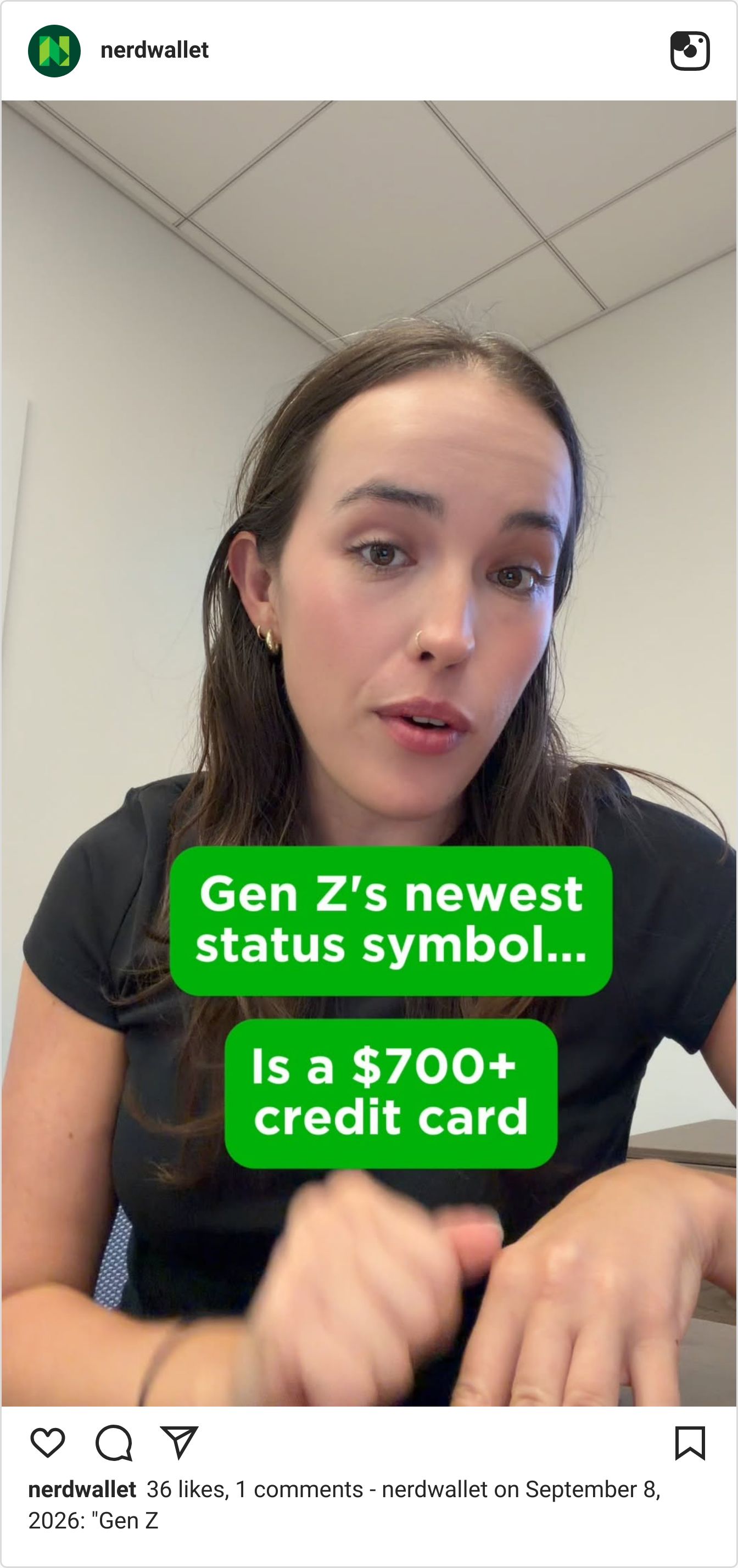
Gen Z’s new status symbol carries a fee
Premium cards bundle together a lot of things younger consumers already value — travel, dining, experiences, convenience and exclusive access — and then turn using them into an optimization game. Watch to learn how to evaluate the perks.

Here’s what else you may have missed this week from NerdWallet:
The economic effects of 9/11 still linger after 25 years. We looked back at how the attacks changed markets, air travel, government spending and more.
Need cash quickly? We rounded up 11 ways to get money fast, plus how long each option could take and what it might cost you.
What are your assets worth? We explained what counts as an asset, how to estimate the value and why keeping track matters.
Could incognito mode save you money when you shop? The Nerds answered this and other trending September money questions.
Elsewhere in money news:
Oil prices surge past $101 a barrel as the Middle East conflict intensifies. (NBC News)
Should you wait until after the Fed meeting to invest in gold? (CBS News)
401(k) savers are setting records. Here’s how to catch up if you’re behind. (Yahoo Finance)
Can President Donald Trump really give all U.S. adults $5,000 if the GOP retains control of Congress in the midterm elections? (AP)
Your MoneyNerd team: Courtney Neidel, Anna Helhoski, Rick VanderKnyff and Lauren Schwahn.
Know someone who’d love MoneyNerd? Open and share this unique referral link.
See all of NerdWallet’s newsletters here.
Until next week,
